Robot training data from real homes
A robot learns a task by watching people do it. GoKuna collects first-person video of people cooking, tidying, folding laundry and handling everyday objects in their own homes, recorded to your spec and checked by a person before it counts.
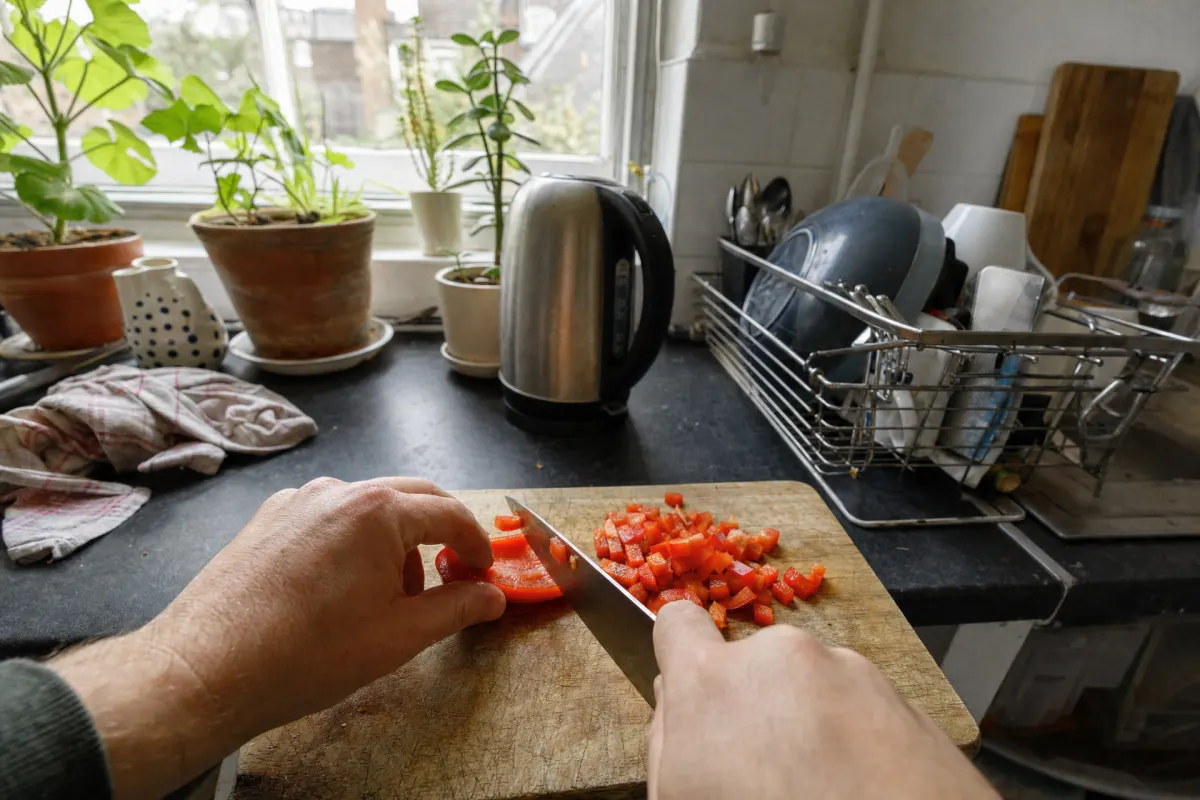
Human demonstrations, filmed from the right place
The camera sits at head height, so the hands, the tools and the objects are in view the way a robot's own cameras would see them. You choose the activities, the camera position, how long each clip runs and what must stay out of frame.
Each recording is one demonstration of one task, from the first reach to the last object put down. That structure is written into the brief, so a clip that starts halfway through the task or cuts off before the end is sent back.
Variety a lab cannot stage
A model trained in one kitchen fails in the next. Real homes give you different counters, different lighting, different objects and different people doing the same task their own way. Household tasks are recruited worldwide, and long-form recording runs in North America to start. Any collection can be limited to the countries you need.
Because contributors record in the place they already do the task, you get the clutter, the awkward angles and the half-full dishwasher that a staged set leaves out.
Consistent enough to train on
Variety only helps when the structure stays fixed. The brief fixes the camera position, the clip structure, the minimum and maximum length and the file format. A person reviews every clip against it, and a clip that misses is rejected with a reason and recorded again while the task is open.
Contributors are paid only for accepted clips, so the fastest way for them to get paid is to follow your brief exactly.
What to put in a robotics brief
The task list: the activities you need demonstrated, written the way you would explain them to a new person. Where the camera sits: head height, chest, or a phone on a head strap. What must be in frame: both hands, the object being handled, the surface it ends up on.
Clip rules: the shortest and longest acceptable recording, whether audio is needed, and what counts as the start and the end of a demonstration. Volume and spread: how many clips or hours in total, how many from each home, and which regions.
If you are not sure of a number, leave it open and we will propose one with the quote.
Mistakes that waste demonstration video
The hands leave the frame at the moment that matters. The camera drifts down during the task, so the second half shows only the floor. The same person records forty clips and the model learns one person's habits. Clips start mid-task, so there is no clean first frame.
Each of these becomes a written rule in the brief and a check at review, so it is caught on the first clip instead of discovered after delivery.
Public datasets and commissioned data
Public egocentric datasets are a good way to start research. Many carry research-only licences, and none were recorded for your task list. Commissioned collection fills the gap: the activities you need, the camera position you train with, and a licence that covers commercial model training.
Licensed for commercial training
Contributors are consenting adults who confirm they are 18 or over and grant a licence to train and evaluate machine learning models, including on behalf of GoKuna's customers. The consent terms are recorded with every task, contributors are told to keep bystanders out of frame without permission, and your company is never named to contributors.
How a collection starts
Send the tasks you need demonstrated, how many hours or clips, from which regions and by when. We reply by email with a quote, and scope and price are agreed before anything starts. Begin with a small first batch, run it through your training pipeline, then scale the brief that works.
What tasks can be recorded?
Everyday tasks people already do at home: cooking, cleaning, tidying, laundry, putting things away, using tools and handling objects. Send the task list and we write it into the brief.
Is this the same as an egocentric dataset?
Yes. Egocentric means filmed from the viewpoint of the person acting. For robotics, the brief also fixes what the hands and objects must show and where each demonstration starts and ends.
Can you collect outside the US?
Yes. Household tasks can be recruited worldwide, and any collection can be limited to specific countries.
How small can a first batch be?
Small enough to check against your pipeline in a day or two. Tell us what you need to see and we size the first batch around it in the quote.